
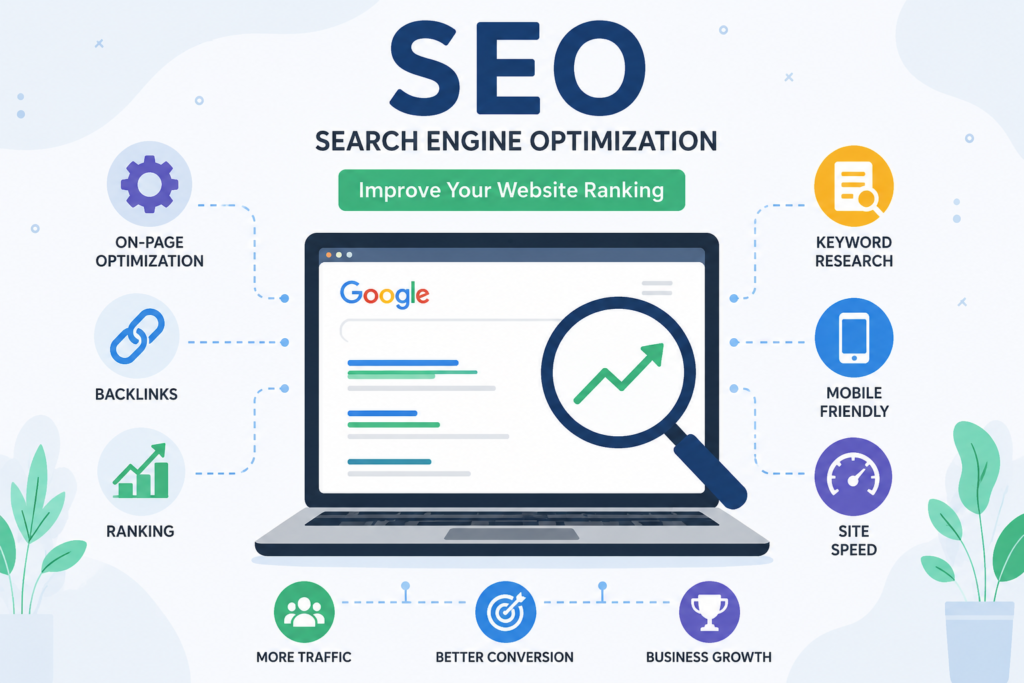
The Role of AI in Modern SEO: How Artificial Intelligence Is Transforming Search Optimization
Introduction
Search Engine Optimization (SEO) has evolved dramatically over the past decade. What once revolved around keyword stuffing, backlink quantity, and technical tweaks has transformed into a sophisticated discipline focused on user intent, content quality, and search experience. At the heart of this transformation lies Artificial Intelligence (AI), a technology that is reshaping how search engines understand content and how marketers optimize websites for visibility.
Today, AI influences nearly every aspect of SEO—from keyword research and content creation to technical audits and predictive analytics. Search engines themselves rely heavily on AI-powered algorithms to deliver more relevant and personalized results. For businesses and digital marketers, understanding the role of AI in modern SEO is no longer optional; it is essential for maintaining competitiveness in an increasingly digital marketplace.
This article explores how AI is changing SEO, the benefits it offers, the challenges it presents, and the best practices for leveraging AI effectively.
Understanding AI in SEO
Artificial Intelligence refers to computer systems capable of performing tasks that typically require human intelligence, such as learning, analyzing data, recognizing patterns, and making decisions.
In SEO, AI helps automate repetitive tasks, analyze large datasets, identify trends, and generate insights that would otherwise require significant time and effort.
Search engines like Google utilize AI technologies to:
Understand user intent
Interpret natural language
Evaluate content quality
Personalize search results
Detect spam and manipulative practices
Similarly, marketers use AI-powered tools to:
Conduct keyword research
Generate content ideas
Optimize website performance
Analyze competitors
Predict ranking opportunities
The integration of AI into SEO has created a more efficient and data-driven approach to digital marketing.
How Search Engines Use AI
-
- Understanding Search Intent
One of the most significant ways AI impacts SEO is through search intent analysis.
In the past, search engines primarily matched keywords to web pages. Today, AI enables search engines to understand the meaning behind a search query rather than simply matching exact words.
For example, if a user searches for:
“Best running shoes for beginners”
Google recognizes that the user is seeking recommendations, comparisons, reviews, and purchasing guidance—not just pages containing those keywords.
This shift means SEO professionals must focus on creating content that satisfies user intent rather than merely targeting specific keywords.
-
- Natural Language Processing (NLP)
Natural Language Processing allows search engines to understand human language more effectively.
Google’s AI systems can analyze:
Context
Synonyms
Sentence structure
User behavior
Semantic relationships
As a result, content creators must write naturally and comprehensively rather than forcing keywords into every paragraph.
High-quality content that answers questions clearly tends to perform better than content optimized solely for keyword density.
-
- Personalized Search Results
AI helps search engines tailor results based on factors such as:
Location
Search history
Device type
User preferences
Browsing behavior
This means two users searching the same term may receive different results.
For businesses, this emphasizes the importance of:
Local SEO
User experience
Audience targeting
Personalized content strategies
AI-Powered Keyword Research
Keyword research remains a cornerstone of SEO, but AI has transformed how marketers identify opportunities.
Traditional keyword research involved manually analyzing search volume and competition. AI-powered tools now provide deeper insights by identifying:
Search intent
Semantic keywords
Related topics
Emerging trends
Long-tail opportunities
Benefits of AI Keyword Research
Faster Analysis
AI can process millions of search queries within seconds, identifying opportunities that might be missed through manual research.
Topic Clustering
Instead of focusing on individual keywords, AI groups related terms into topic clusters.
For example:
Main Topic: Digital Marketing
Related clusters:
SEO
Content Marketing
Email Marketing
Social Media Marketing
PPC Advertising
This helps marketers create more comprehensive content strategies.
Predictive Insights
Some AI tools can predict rising search trends before they become highly competitive, allowing businesses to gain an early advantage.
AI and Content Creation
Content remains one of the most important ranking factors, and AI has significantly changed content production processes.
Content Ideation
AI tools can analyze search trends and suggest:
Blog topics
Frequently asked questions
Content gaps
Trending subjects
This helps marketers identify valuable content opportunities quickly.
Content Generation
AI writing assistants can create:
Blog outlines
Meta descriptions
Product descriptions
Social media captions
Draft articles
While AI-generated content can improve efficiency, human oversight remains essential to ensure:
Accuracy
Brand voice consistency
Originality
Expertise
Trustworthiness
The most successful content strategies combine AI efficiency with human creativity and expertise.
Content Optimization
AI tools can evaluate content based on:
Readability
Keyword relevance
Search intent alignment
Semantic coverage
Competitive analysis
These recommendations help improve content quality and search visibility.
Technical SEO and AI
Technical SEO can be complex, particularly for large websites. AI simplifies many technical optimization tasks.
Website Audits
AI-powered platforms can quickly identify:
Broken links
Duplicate content
Missing metadata
Crawl errors
Slow-loading pages
This enables faster issue resolution and improved website performance.
Crawl Optimization
Search engines allocate a limited crawl budget to websites.
AI can help identify:
Low-value pages
Indexing issues
Crawl inefficiencies
Optimizing crawl budgets ensures important pages are discovered and indexed more effectively.
Site Performance Analysis
Website speed is a critical ranking factor.
AI tools monitor:
Page load times
Core Web Vitals
Mobile usability
Server performance
They can also provide actionable recommendations to improve user experience.
AI and User Experience (UX)
Modern SEO is closely linked to user experience.
Search engines prioritize websites that provide value and positive user interactions.
AI helps improve UX through:
Behavioral Analysis
AI analyzes user behavior metrics such as:
Bounce rates
Session duration
Click-through rates
Scroll depth
These insights reveal how visitors interact with content.
Personalization
AI enables websites to deliver personalized experiences based on user preferences.
Examples include:
Personalized product recommendations
Dynamic content
Customized landing pages
Tailored email campaigns
Improved personalization often leads to higher engagement and conversions.
Chatbots and Virtual Assistants
AI-powered chatbots provide:
Instant customer support
Lead generation
Product recommendations
Frequently asked question responses
Enhanced user engagement can indirectly contribute to SEO performance through improved behavioral signals.
AI for Competitive Analysis
Understanding competitors is essential in SEO.
AI tools can evaluate competitor websites by analyzing:
Keyword rankings
Content strategies
Backlink profiles
Traffic estimates
SERP performance
These insights help businesses identify:
Market opportunities
Content gaps
Link-building prospects
Ranking weaknesses
Rather than manually reviewing dozens of websites, marketers can gain actionable intelligence within minutes.
AI and Link Building
Backlinks remain an important ranking factor.
AI supports link-building efforts by:
Identifying Prospects
AI can discover websites that are:
Relevant
Authoritative
Likely to provide backlinks
Outreach Automation
AI assists with:
Personalized outreach emails
Relationship management
Follow-up scheduling
Backlink Monitoring
AI tools continuously monitor backlink profiles and detect:
Lost links
Toxic links
New opportunities
This improves efficiency and reduces manual workload.
Predictive SEO
One of the most exciting developments in modern SEO is predictive analytics.
AI can forecast future trends by analyzing:
Historical search data
Consumer behavior
Industry patterns
Seasonal demand
Predictive SEO helps businesses:
Publish content earlier
Anticipate market changes
Capture emerging search traffic
Stay ahead of competitors
Instead of reacting to trends, marketers can proactively position themselves for future opportunities.
Voice Search and AI
Voice search continues to grow with the popularity of smart devices and virtual assistants.
AI powers voice search by understanding conversational language.
Voice searches tend to be:
Longer
More natural
Question-based
For example:
Text search:
“best SEO tools”
Voice search:
“What are the best SEO tools for small businesses?”
To optimize for voice search, marketers should focus on:
Conversational content
FAQ pages
Featured snippets
Local SEO
Structured data
AI helps identify voice search opportunities and optimize content accordingly.
AI and Visual Search
Visual search allows users to search using images instead of text.
AI-powered image recognition technologies help search engines understand visual content.
Businesses can optimize for visual search by:
Using descriptive image filenames
Adding alt text
Implementing structured data
Improving image quality
As visual search adoption grows, image optimization becomes increasingly important.
Challenges of Using AI in SEO
While AI offers many benefits, it also presents challenges.
Over-Reliance on Automation
AI can automate tasks, but it cannot fully replace human expertise.
Excessive reliance on AI-generated content may result in:
Generic articles
Inaccuracies
Lack of originality
Weak brand identity
Human review remains essential.
Data Quality Issues
AI systems depend on data quality.
Poor data can lead to:
Incorrect recommendations
Misleading insights
Ineffective strategies
Marketers should verify AI-generated suggestions before implementation.
Increased Competition
As AI tools become widely available, more businesses can produce optimized content at scale.
This increases competition and raises the importance of:
Expertise
Original research
Unique insights
Strong branding
Simply generating large volumes of content is no longer enough.
Best Practices for Using AI in SEO
To maximize results, businesses should follow these best practices:
Combine AI with Human Expertise
Use AI to assist with:
Research
Analysis
Optimization
Automation
Allow humans to handle:
Strategy
Creativity
Brand messaging
Editorial review
Focus on User Intent
Create content that solves real problems and answers genuine user questions.
User satisfaction remains the ultimate goal of search engines.
Prioritize Content Quality
Ensure content is:
Accurate
Helpful
Original
Well-structured
Trustworthy
High-quality content consistently outperforms low-value AI-generated pages.
Monitor Performance Continuously
Use analytics tools to track:
Rankings
Traffic
Engagement
Conversions
AI-generated recommendations should be validated through real-world performance data.
Stay Updated
AI technology evolves rapidly.
SEO professionals should continually monitor:
Search engine updates
AI developments
User behavior changes
Industry trends
Adaptability will remain a key competitive advantage.
The Future of AI in SEO
The role of AI in SEO will continue expanding over the coming years.
Future developments may include:
More advanced search personalization
Improved predictive analytics
Enhanced content generation capabilities
Smarter voice search experiences
Greater integration of multimodal search (text, image, video, and voice)
Search engines will become increasingly effective at understanding context, intent, and user needs.
As a result, successful SEO strategies will focus less on manipulating algorithms and more on delivering exceptional value to users.
Businesses that embrace AI responsibly while maintaining a strong emphasis on quality, trust, and user experience will be best positioned for long-term success.
Conclusion
Artificial Intelligence has fundamentally transformed modern SEO. From understanding user intent and optimizing content to conducting technical audits and predicting future trends, AI provides powerful tools that help marketers work smarter and more efficiently.
However, AI is not a replacement for human expertise. The most effective SEO strategies combine AI-driven insights with creativity, critical thinking, and deep audience understanding. Search engines are increasingly rewarding content that demonstrates genuine value, expertise, and trustworthiness.
As AI continues to evolve, businesses that adapt their SEO strategies accordingly will gain a significant competitive advantage. By leveraging AI responsibly and focusing on delivering exceptional user experiences, organizations can achieve stronger rankings, increased traffic, and sustainable digital growth in the years ahead.